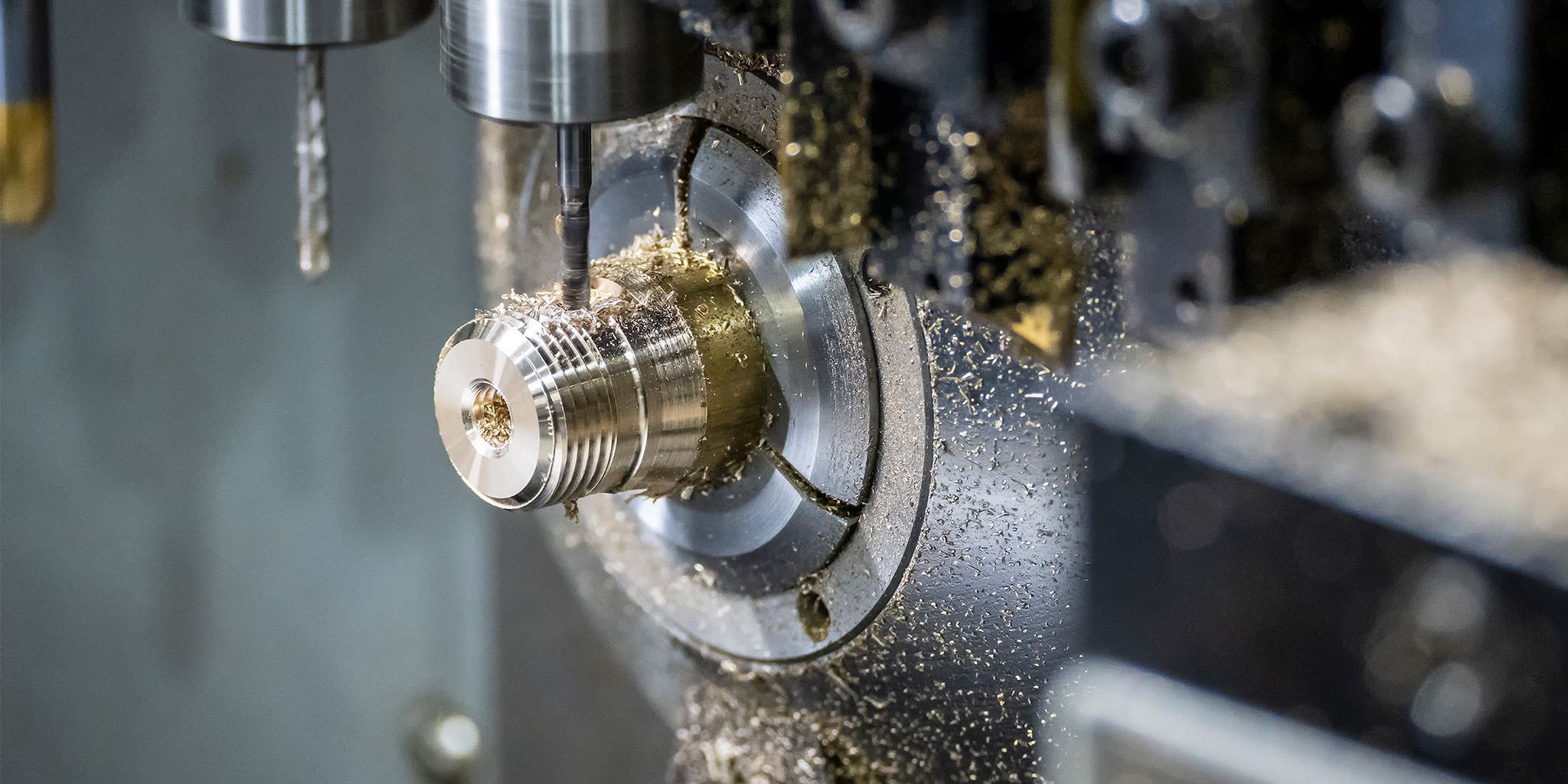
The Part Never Leaves the Spindle.
That Changes Everything.
Combined turning and milling in a single clamping. No re-fixturing. No tolerance stack-up between operations. Complete parts from one machine — and shops with capacity to take your work.
A mill-turn machine combines a CNC lathe and a CNC mill into a single platform. The workpiece is held in a spindle that can rotate for turning and index to precise angular positions for milling, drilling, and tapping. Some machines add a B-axis for angled milling, a sub-spindle for back-working, and live tooling with full Y-axis travel.
The result: a machine that can produce a complete part — turned diameters, milled flats, cross-holes, keyways, threads, pockets — without ever removing the workpiece from the spindle. One clamping. One datum. One setup.
This matters because every time a part moves between machines, three things happen: time is lost to setup, tolerance is lost to re-fixturing, and risk is added from handling. Mill-turn eliminates all three.
When Does a Part Justify Mill-Turn?
Not every part needs it. The question is whether the part has tight geometric relationships between turned and milled features.
Belongs on Mill-Turn
- Turned diameters with perpendicular cross-holes
- Hydraulic valve bodies — bores with milled ports
- Aerospace fittings — hex flats on turned shanks
- Medical components — bone screws with hex drives
- Connector housings — turned OD with keyways or flats
- Any part with true position between turned and milled features
Doesn't Need Mill-Turn
- Pure turning — no milled features at all
- Pure milling — no turned features at all
- Very large parts exceeding machine envelope
- Simple parts where turned and milled features are independent
- High-volume work where dedicated machines are faster
- Parts where the mill-turn premium exceeds re-fixture risk
The decision usually comes down to one question: does the drawing have a tight geometric tolerance between a turned feature and a milled feature? True position callout referencing both a turned diameter and a milled feature? Mill-turn. If the turned and milled features are independent of each other, separate machines may be faster and cheaper.
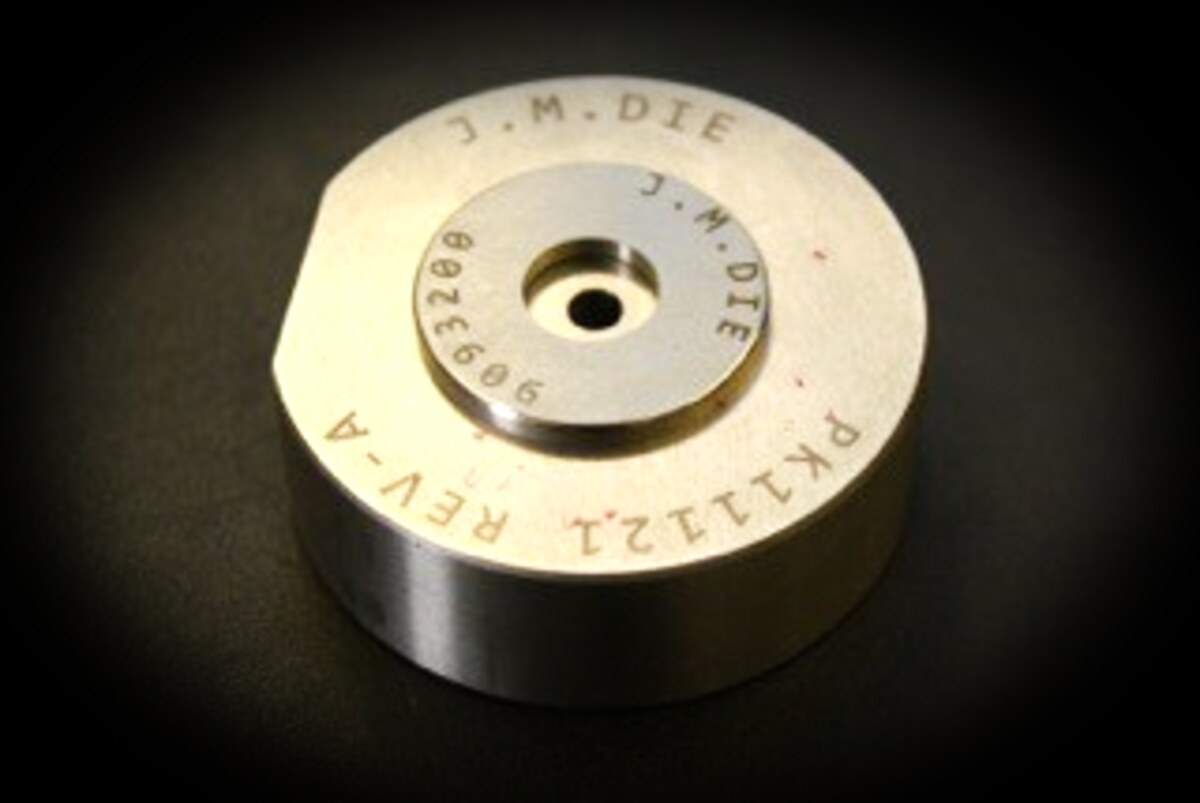
Every time a part moves between machines, you lose time, tolerance, and control. Mill-turn is the answer to "why did we accept that as normal?"
Mill-Turn Guides
Everything an engineer or procurement team needs to evaluate, specify, and source mill-turn work.
When to Use Mill-Turn
Decision framework for when mill-turn saves money vs separate machines.
Tolerance Guide
Single-setup accuracy, true position between turned and milled features.
Design for Mill-Turn
Datum strategy, feature access, sub-spindle work, back-working.
Cost Drivers
Hourly rates, setup advantage, when the premium pays for itself.
Mill-Turn vs. Separate Ops
One setup vs lathe + mill with a fixture transfer. Cost, tolerance, lead time.
Applications by Industry
Aerospace fittings, hydraulics, medical, connectors, firearms, motorsport.